Catalyst Products Description
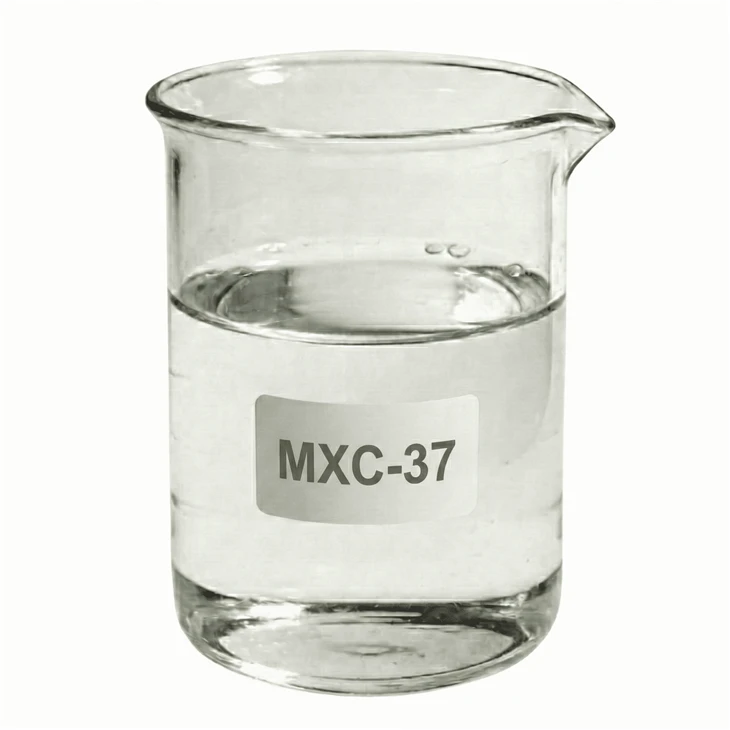
The product name of MXC-37 is 2-(2-(dimethylamino) ethoxy) ethanol, abbreviated as DMAEE, and its CAS number is 1704-62-7. It is a non-emission, low-odor amine catalyst for the production of polyurethane foams. Due to its high foaming activity, it is particularly suitable for formulations with high water content, mainly for low-density, water-foamed porous spray polyurethane foams (SPF). Incorporation of DMAEE into the polymer minimizes the common amine odor in the foam. It can be used as the main catalyst alone or as a co-catalyst to reduce the use of BDMAEE foam catalysts. For ester based stabilizers soft foams, microcellular foams, elastomers, RIM and RRIM, and rigid foam packaging applications.
BRAND NAME: MXC-37
CROSS REFERENCE GUIDE:27
PRODUCTS NAME: 2-(2-(dimethylamino)ethoxy)ethanol
CAS NO.: 1704-62-7
PURITY: Min.99%
WATER CONTENT: Max.0.3%
MOLECULAR FORMULAR: C6H15NO2
MOLECULAR WEIGHT: 133.1888
APPEARANCE: Colorless clear liquid
SPECIFIC GRAVITY: 0.957g/cm3
BOILING POINT: 187.6°C at 760 mmHg
REFRACTIVE INDEX: 1.442
FLASH POINT: 67.3°C
APPLICATIONS
It is a low odor reactive catalysts mainly used in rigid foam. It can also be used in moulded foam and polyether PU slabstock.
Package:
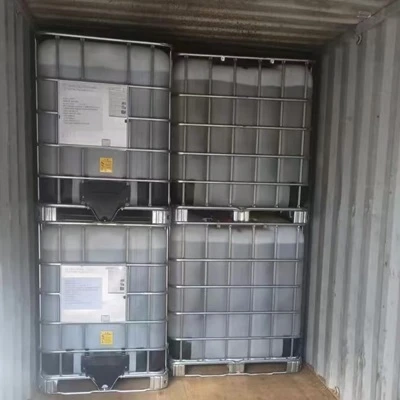
190kgs net drum.
HAZARDS IDENTIFICATION
GHS classification
Flammable liquids - Category 4
Acute toxicity - Dermal Category 4
Skin corrosion - Category 1B
Serious Eye Damage - Category 1
Reproductive toxicity - Category 2
GHS label elements
Hazard pictograms/symbols
Signal Word: Danger
Hazard Statements:H227:Combustible liquidH312:Harmful in contact with skin.H314:Causes severe skin burns and eye damage.H361:Suspected of damaging fertility or the unborn child
Precautionary Statements
Prevention : P201:Obtain special instructions before use.P202: Do not handle until all safety precautions have been readand understood.P210: Keep away from heat, hot surfaces, sparks, open flames,and otherignition sources. No smoking.P264:Wash hands thoroughly after handling.P280:Wear protective gloves/protective clothing/eyeprotection/face protection.P281: Use personal protective equipment as required.
Response : P301+P330+P331 :IF SWALLOWED: rinse mouth. Do NOTinduce vomiting.P303+P361+P353 :IF ON SKIN (or hair): Remove/Take offimmediately all contaminated clothing. Rinse skin withwater/shower.P304+P340 :IF INHALED: Remove victim to fresh air and keepat rest in a position comfortable for breathing.P305+P351+P338 :IF IN EYES: Rinse cautiously with water forseveral minutes. Remove contact lenses, if present and easy to do.Continue rinsing.P308+P313 :IF exposed or concerned: Get medicaladvice/attention.P310 :Immediately call a POISON CENTRE/doctor.P363 :Wash contaminated clothing before reuse.P370+P378 :In case of fire, use recommended extinguishingmedia for extinction.
Storage : P403+P235:Store in a well-ventilated place. Keep cool.P405:Store locked up.
Disposal : P501:Disposal of contents/container to be specified inaccordance with regulations.
Hazards not otherwise classifiedHarmful in contact with skin.CorrosiveKeep away from heat and sources of ignition.Combustible Liquid.
FIRST AID MEASURES
General advice : Seek medical advice. If breathing has stopped or is labored, giveassisted respirations. Supplemental oxygen may be indicated. If the hearthas stopped, trained personnel should begin cardiopulmonary resuscitationimmediately.
Eye contact : Hold eyelids apart, initiate and maintain gentle and continuousirrigation until the patient receives medical care. If medical care is notpromptly available, continue to irrigate for one hour.
Skin contact : Immediately remove contaminated clothing, and any extraneouschemical, if possible to do so without delay. Flush immediately withcopious amounts of water. Initiate and maintain continuous irrigation untilthe patient receives medical care. If medical care is not promptly available,continue to irrigate for one hour. Cover wound with sterile dressing.
Ingestion : Do not induce vomiting without medical advice. Never give anythingby mouth to an unconscious person. Prevent aspiration of vomit. Turnvictim's head to the side.Inhalation : Move to fresh air.
Most important : Eye disease. Skin disorders and Allergies.
Hot Tags: MXC-37, China MXC-37 manufacturers, suppliers, factory, Flame Retardants, Dmcha Catalyst, Polycat 77, Teda Catalyst, DABCO K 15, Metal Catalysts