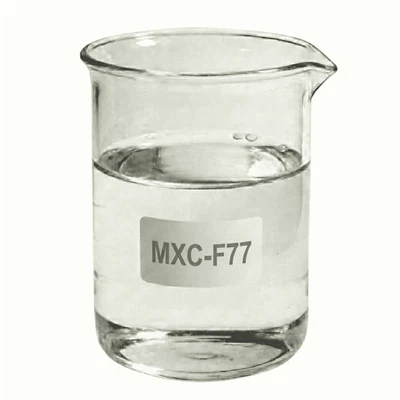
Catalyst Products Description
The TMA catalyst is a chemical mixture that appears as a colorless to yellowish transparent liquid. It provides a uniform and controlled rise profile compared to potassium-based catalysts. It promotes the polyisocyanurate trimerization reaction. It is mainly used in rigid foam applications where improved flowability is required.
Brand Name: MXC-TMA
APPEARANCE:Colorless to light yellow transparent liquid
AMNE VALUE(mgKOH/g): Min.160
ACID VALUE(mgKOH/g):Max.9
Color(APHA): Max.100
Water content: Max.2%
Viscosity at 25°C lg/cm]:190
APPLICATIONS
It is suitable for all types of polyisocyanurate foam systems. It is typically used in combination witha polyurethane-type catalyst.
STORAGE:
It should be kept sealed in cool dry and ventilated place.
PACKAGE:
200kgs net steel drum
Customer Service
We earn your respect by delivering on time and on budget. We built our reputation on exceptional customer service. Discover the difference it makes.
Expertise and Experience
Our team of experts have years of experience in delivering high quality services to our clients. We hire only the best professionals who have a proven track record of delivering exceptional results.
One-stop Service
We promise to provide you with the fastest reply, the best price, the best quality, and the most complete after-sales service.
State-of-the-art Technology
We use the latest technology and tools to deliver high quality services. Our team is well-versed in the latest trends and advancements in technology and uses them to provide the best results.
Competitive Pricing
We offer competitive pricing for our services without compromising on quality. Our prices are transparent, and we do not believe in hidden charges or fees.
Customer Satisfaction
We are committed to delivering high quality services that exceed our clients' expectations. We strive to ensure that our clients are satisfied with our services and work closely with them to ensure their needs are met.
What is TMR-2 CATALYST
It provides a uniform and controlled rise profile compared to potassium-based catalysts. It promotes the polyisocyanurate trimerization reaction. It is mainly used in rigid foam applications where improved flowability is required.

BRAND NAME: MXC-A1
CROSS REFERENCE GUIDE:BL-11
PRODUCT NAME: BIS(2-DIMETHYLAMINOETHYL) ETHER(A-1)
CAS NO.: 3033-62-3
Purity:70%±1%
Water: ≤0.3%

BRAND NAME: MXC-A33
CROSS REFERENCE GUIDE:33LV
PRODUCT NAME: 33% TEDA in 67% DPG
CAS NO.: 280-57-9
PURITY: ≥33%
WATER CONTENT: ≤0.5%

BRAND NAME: MXC-C15
CROSS REFERENCE GUIDE:15
PRODUCT NAME: Tetramethyliminobispropylamine
CAS NO.: 6711-48-4
PURITY : Min.95%
WATER : Max.0.5%

BRAND NAME: MXC-R70
CROSS REFERENCE GUIDE: JEFFCAT ZR-70
PRODUCTS NAME: 2-(2-(dimethylamino)ethoxy)ethanol
CAS NO.: 1704-62-7
PURITY: Min.98%
WATER CONTENT: Max.0.3%

Brand Name: MXC-T
CROSS REFERENCE GUIDE:T, JEFFCATZ-110
PRODUCT NAME: N,N,N′-trimethylaminoethylethanolamine
CAS NO.: 2212-32-0
PURITY : Min.98%
WATER : Max.0.5 %

BRAND NAME: MXC-BDMA
CROSS REFERENCE GUIDE:DABCO BDMA
PRODUCT NAME: N, N-DIMETHYLBENZYLAMINE
CAS NO.: 103-83-3
PURITY: ≥98.5%
WATER: ≤0.5%

BRAND NAME: MXC-41
CROSS REFERENCE GUIDE:POLYCAT 41
PRODUCT NAME: 1,3,5-Tris(3-dimethylaminopropyl)hexahydro-s-triazine
CAS NO.: 15875-13-5
Viscosity at 25℃: 26~33mp.s
Water content: Max.1.0%

BRAND NAME: MXC-DMEA
CROSS REFERENCE GUIDE:DABCO DMEA
PRODUCT NAME: Dimethylethanolamine (DMEA)
CAS NO.: 108-01-0
PURITY: ≥99.00%
WATER: ≤0.20%

BRAND NAME: MXC-TEDA
CROSS REFERENCE GUIDE:TEDA
PRODUCT NAME: TRIETHYLENEDIAMINE (TEDA)
CAS NO.: 280-57-9
PURITY: ≥99.0%
WATER: ≤0.5%
In Chemistry, catalysts are defined as those substances which alter the rate of reaction by changing the path of reaction. Most of the time, a catalyst is used to speed up or increase the rate of the reaction. However, if we go to a deeper level, catalysts are used to break or rebuild the chemical bonds between the atoms which are present in the molecules of different elements or compounds. In essence, catalysts encourage molecules to react and make the whole reaction process easier and more efficient.
Some of the important characteristic features of catalysts are given below:
A catalyst does not initiate a chemical reaction.
A catalyst is not consumed in the reaction.
Catalysts tend to react with reactants to form intermediates and, at the same time, facilitate the production of the final reaction product. After the whole process, a catalyst can regenerate.
A catalyst can be either in solid, liquid or gaseous forms. Some of the solid catalysts include metals or their oxides, including sulphides and halides. Semi-metallic elements such as boron, aluminium and silicon are also used as catalysts. Further, liquid and gaseous elements, which are in pure form, are used as catalysts. Sometimes, these elements are also used along with suitable solvents or carriers.
The reaction which involves a catalyst in their system is known as a catalytic reaction. In other words, a catalytic action is a chemical reaction between the catalyst and a reactant. This results in the formation of chemical intermediates that can further react quite readily with each other or with another reactant to form a product. However, when the reaction between the chemical intermediates and the reactants occurs or takes place, the catalyst is regenerated.
The reaction modes between the catalysts and the reactants usually tend to vary widely, and in the case of solid catalysts, it is more complex. Reactions can be acid-base reactions, oxidation-reduction reactions, coordination complexes formation, as well as the production of free radicals. For solid catalysts, the reaction mechanism is greatly influenced by surface properties and electronic or crystal structures. Some types of solid catalysts, such as polyfunctional catalysts, can have several reaction modes with the reactants.
Types of Catalysts with Examples
There are several types of catalysts that can be used depending on the need or requirement of the chemical reaction. They are explained below.
Positive Catalysts
Catalysts that increase the rate of a chemical reaction are positive catalysts. It increases the rate of reaction by lowering the activation energy barriers such that a large number of reaction molecules are converted into products, and thereby the percentage of yield of products increases.
Positive catalyst example: In the preparation of NH3 by Haber's process, iron oxide acts as a positive catalyst and increases the yield of ammonia in spite of less reaction of nitrogen.
Negative Catalysts
Catalysts that decrease the rate of reaction are negative catalysts. It decreases the rate of reaction by increasing the activation energy barrier, which decreases the number of reactant molecules to transform into products, and hence the rate of reaction decreases.
Negative catalyst example: The decomposition of hydrogen peroxide into water and oxygen is retarded by using acetanilide, and this acts as a negative catalyst to decrease the rate of decomposition of hydrogen peroxide.
Promoter or Accelerators
A substance that increases the catalyst activity is known as a promoter or accelerator.
Example: In Haber's process, molybdenum or a mixture of potassium and aluminium oxides act as promoters.
Catalyst Poisons or Inhibitors
Substances that decrease the catalyst activity are known as catalyst poisons or inhibitors.
Example: In the hydrogenation of alkyne to an alkene, catalyst palladium is poisoned with barium sulphate in quinolone solution, and the reaction is stopped at the alkene level. This type of catalyst is known as Lindler's catalyst.
Units
The derived SI unit for measuring the catalytic activity of a catalyst is "katal". It is further quantified in moles per second. If we want to describe the productivity of a catalyst, it can be defined by the turnover number (TON). Catalytic activity can be described by the turnover frequency (TOF), which is TON per time unit. Besides, the enzyme unit is its biochemical equivalent.
Determination of the structure and properties of catalysts
The nature of the active centres in catalytic material is further demonstrated by the enhancement of the catalytic activity of relatively inactive materials when they are subjected to intense radiation. Silica gel bombarded by gamma rays from cobalt-60 turns purplish in colour and becomes capable of inducing the reaction H2 + D2→ 2HD at liquid-nitrogen temperatures. The colour centres, which are positive "holes" (deficiencies) trapped in the vicinity of an oxygen ion next to an aluminum impurity, are bleached in vacuo above 200 °C (400 °F) and are destroyed by hydrogen even at room temperature.
The properties of dilute concentrations of platinum metals in oxide matrices, such as silica and alumina, as well as on carbon carriers have been studied by Russian and American scientists. Such catalysts have technical significance in processes for the reforming of gasoline. In such catalysts-containing about 0.5 percent by weight of platinum or palladium-the degree of dispersion of the metal (that is, the ratio of the number of surface metal atoms to the total number present) is close to one. By contrast, on platinum foil the dispersion is only about 4 × 10⁻³. The titration and adsorption procedures with hydrogen and oxygen are employed to evaluate these dispersions.
From these studies it becomes clear that there are two types of behaviour resulting from dispersion. For numerous catalytic processes, ranging from hydrogen-deuterium exchange to the hydrogenation of benzene and the hydrogenolysis of cyclopentane, the reactions are independent of dispersion in the critical region-with catalyst particle size of 5 nm or less. Such structure-insensitive processes have been termed facile reactions. On the other hand, there are reactions such as the isomerization of neopentane to isopentane and simultaneous cracking of the latter to isobutane and methane on platinum-alumina catalysts, where the selectivity for isomerization varies by a factor of 100 for the various catalysts studied (when the hydrogen-neopentane ratio is 10). Thus, the same 1 percent platinum-on-carbon catalyst showed a selectivity ratio of isomerization to hydrogenolysis of 2.5 when the catalyst was reduced in hydrogen at 500 °C (900 °F) and a selectivity ratio of 13 when the catalyst was fired in vacuo at 900 °C (1,600 °F), the percentage dispersion remaining at 35 percent in both cases. Such structure-sensitive catalytic reactions have been called "demanding reactions." The gain in selectivity appears to be largely because of a reduction in the rate of hydrogenolysis. Since other studies have shown that heating in vacuo to 900 °C tends to develop certain (111) facets of the metal, it is thought that the increase in selectivity is due to a more abundant triadsorption of neopentane on the samples fired at high temperature. It has been shown that a crystallite of platinum about 2 nm in size has unusual surfaces not present in a regular octahedral crystallite of similar size. A number of sites where an adsorbed molecule could be surrounded by five platinum nearest neighbours were found on the crystallite with the unusual surface.
An alternative approach to the problem of surface catalysis involves the consideration of electronic factors in catalyst and reactants. Many catalytic materials are semiconductors. It is thought that these can form a variety of bonds with reactants depending on the free lattice electrons and the holes in the catalyst lattice. Chemisorbed particles react in ways that are dependent on the form of attachment to the surface and that vary with the extent of coverage of the surface as well as with the available supply of electrons and holes. The surface behaves as would free radicals that are introduced directly into the reacting species, dependent on the electrochemical properties of the surface and the bulk of the semiconductor material. Such considerations have led to the determination of the character of the catalyst as a semiconductor and of the adsorbate as an electrochemical species, whether it is composed of positive or negative ions or free atoms or radicals. Catalytic activity has also been explored as a function of the d-band character-that is, the number of electrons in d orbitals in the atoms of the catalyst materials.
Since 1940 various instrumental techniques have been developed to explore the structure of catalytic materials and the character of the adsorbed species, even during the reaction itself. Among these techniques are electron microscopy, field emission microscopy, electron microprobe methods, magnetic measurements, infrared spectroscopy, Mössbauer spectroscopy, measurements of heats of immersion, flash desorption procedures, low-energy electron diffraction studies, and nuclear magnetic resonance and electron spin resonance techniques.
Amine Catalyst Market Overview and Report Coverage
A tertiary amine catalyst is a type of catalyst that contains a nitrogen atom with three alkyl or aryl groups attached to it. It is widely used in various industries such as petrochemical, pharmaceutical, and chemical for the synthesis of different compounds. Tertiary amine catalysts are highly effective in promoting chemical reactions, especially those involving the formation and breaking of chemical bonds.
The future outlook for the tertiary amine catalyst market is positive. The increasing demand for polymers, plastics, and specialty chemicals is expected to drive the growth of the market. The petrochemical industry, in particular, is a major consumer of tertiary amine catalysts, and the growing demand for petrochemical products is fueling the market growth.
Moreover, advancements in technology and ongoing research and development efforts are leading to the development of more efficient and versatile tertiary amine catalysts. Manufacturers are focusing on improving the catalytic activity, selectivity, and stability of these catalysts to meet the evolving needs of various industries.
The current outlook for the tertiary amine catalyst market is also promising. The market is witnessing significant demand from industries such as pharmaceuticals, agrochemicals, and polymer manufacturing. The rising adoption of green chemistry and sustainable manufacturing practices is further driving the demand for tertiary amine catalysts.
According to the mentioned information, the tertiary amine catalyst market is expected to grow at a compound annual growth rate (CAGR) of % during the forecasted period. This growth can be attributed to factors such as increasing industrialization, favorable government regulations, and the expanding application range of tertiary amine catalysts.
What are the Emerging Trends in the Global Tertiary Amine Catalyst market
Emerging trends in the global tertiary amine catalyst market include the increasing demand for sustainable and eco-friendly catalysts, driven by stricter environmental regulations. There is a growing interest in bio-based tertiary amine catalysts derived from renewable resources. Additionally, the market is witnessing a rise in the adoption of tertiary amine catalysts in various sectors such as pharmaceuticals, polymers, and agriculture. Technological advancements and product innovations are leading to the development of more efficient and selective tertiary amine catalysts. The market is also experiencing a shift towards water-based systems and the usage of advanced catalyst recovery methods, enhancing efficiency and reducing costs.
Applications of CATALYST
According to some estimates, 60 percent of all commercially produced chemical products require catalysts at some stage during their manufacture.The most effective catalysts are usually transition metals or transition metal complexes.
The catalytic converter of an automobile is a well-known example of the use of catalysts. In this device, platinum, palladium, or rhodium may be used as catalysts, as they help break down some of the more harmful byproducts of automobile exhaust. A "three-way" catalytic converter performs three tasks: (a) reduction of nitrogen oxides to nitrogen and oxygen; (b) oxidation of carbon monoxide to carbon dioxide; and (c) oxidation of unburnt hydrocarbons to carbon dioxide and water.
Other examples of catalysts and their applications are as follows.
Ordinary iron is used as a catalyst in the Haber process to synthesize ammonia from nitrogen and hydrogen, as mentioned above.
The mass production of a polymer such as polyethylene or polypropylene is catalyzed by an agent known as the Ziegler-Natta catalyst, which is based on titanium chloride and alkyl aluminum compounds.
Vanadium(V) oxide is a catalyst for the manufacture of sulfuric acid at high concentrations, by a method known as the contact process.
Nickel is used in the manufacture of margarine.
Alumina and silica are catalysts in the breakdown of large hydrocarbon molecules into simpler ones-a process known as cracking.
A number of enzymes are used for chemical transformations of organic compounds. These enzymes are called biocatalysts and their action is called biocatalysis.
The electrodes of a fuel cell are coated with a catalyst such as platinum, palladium, or nanoscale iron powder.
The Fischer-Tropsch process is a chemical reaction in which carbon monoxide and hydrogen are converted into liquid hydrocarbons, in the presence of catalysts based on iron and cobalt. This process is mainly used to produce a synthetic petroleum substitute for fuel or lubrication oil.
Hydrogenation reactions, which involve the addition of hydrogen to organic compounds such as alkenes or aldehydes, require a catalyst such as platinum, palladium, rhodium, or ruthenium.
A number of chemical reactions are catalyzed by acids or bases.
Our Factory
We have stable and superior route of synthesis, strict quality control and quality assurance system, experienced and responsible team, efficient and safe logistics. Based on this, our products are well recognized by the customers in Europe, Americas, Asia, Middle East etc.

FAQ
Q: What is a catalyst very short answer?
Q: What is the role of catalyst poison in Rosenmund reaction?
Q: What are the key factors in heterogeneous catalysis?
– Adsorption of reactant molecules activation centre.
– Formation of activation complex at the centre.
– This complex decomposes to give products.
– Desorption of products from the surface of the catalyst.
Q: What is the role of promoters in Haber's process?
Q: What is the significance of autocatalysis?
Q: What does catalyst mean in simple words?
Q: What is a catalyst answer?
Q: What is an example of a catalyst?
Q: What is a catalyst in biology?
Q: Is catalyst a good thing?
Q: Is being a catalyst good?
Q: What are the 3 types of catalyst?
Q: How does something act as a catalyst?
Q: What is another term for a catalyst?
Q: What is the opposite of a catalyst?
Q: What makes a good catalyst?
Q: What is a catalyst in biology for kids?
Q: Can a human be a catalyst?
Q: What is the most useful catalyst?
Q: How does a catalyst make a reaction go faster?
Hot Tags: TMA CATALYST, China TMA CATALYST manufacturers, suppliers, factory, Polycat 77, POLYCAT 15, Silicone L618, Ceftazidime Intermediate, dabco t 12 tds, 33lv Catalyst