Customer Service
We earn your respect by delivering on time and on budget. We built our reputation on exceptional customer service. Discover the difference it makes.
Expertise and Experience
Our team of experts have years of experience in delivering high quality services to our clients. We hire only the best professionals who have a proven track record of delivering exceptional results.
One-stop Service
We promise to provide you with the fastest reply, the best price, the best quality, and the most complete after-sales service.
State-of-the-art Technology
We use the latest technology and tools to deliver high quality services. Our team is well-versed in the latest trends and advancements in technology and uses them to provide the best results.
Competitive Pricing
We offer competitive pricing for our services without compromising on quality. Our prices are transparent, and we do not believe in hidden charges or fees.
Customer Satisfaction
We are committed to delivering high quality services that exceed our clients' expectations. We strive to ensure that our clients are satisfied with our services and work closely with them to ensure their needs are met.
What is T CATALYST
Let's talk about what catalysts are. A catalyst is a compound or element that increases the rate of a chemical reaction, e.g. the speed at which it occurs, without itself being part of the reaction. Generally speaking, a catalyst is not destroyed, consumed, or permanently changed in the reaction.

BRAND NAME: MXC-41
CROSS REFERENCE GUIDE:POLYCAT 41
PRODUCT NAME: 1,3,5-Tris(3-dimethylaminopropyl)hexahydro-s-triazine
CAS NO.: 15875-13-5
Viscosity at 25℃: 26~33mp.s
Water content: Max.1.0%

BRAND NAME: MXC-8
CROSS REFERENCE GUIDE:8
PRODUCT NAME: N,N-DIMETHYLCYCLOHEXYLAMINE(DMCHA)
CAS NO.: 98-94-2
PURITY: MIN.99.0%
WATER: MAX. 0.5%

BRAND NAME: MXC-37
CROSS REFERENCE GUIDE:27
PRODUCTS NAME: 2-(2-(dimethylamino)ethoxy)ethanol
CAS NO.: 1704-62-7
PURITY: Min.98%
WATER CONTENT: Max.0.3%

BRAND NAME: MXC-5
CROSS REFERENCE GUIDE:POLYCAT 5
PRODUCT NAME: PENTAMETHYLDIETHYLENETRIAMINE (PMDETA)
CAS NO.: 3030-47-5
PURITY: ≥98.5%
WATER: ≤0.5 %

BRAND NAME: MXC-A1
CROSS REFERENCE GUIDE:BL-11
PRODUCT NAME: BIS(2-DIMETHYLAMINOETHYL) ETHER(A-1)
CAS NO.: 3033-62-3
Purity:70%±1%
Water: ≤0.3%

BRAND NAME: MXC-A33
CROSS REFERENCE GUIDE:33LV
PRODUCT NAME: 33% TEDA in 67% DPG
CAS NO.: 280-57-9
PURITY: ≥33%
WATER CONTENT: ≤0.5%

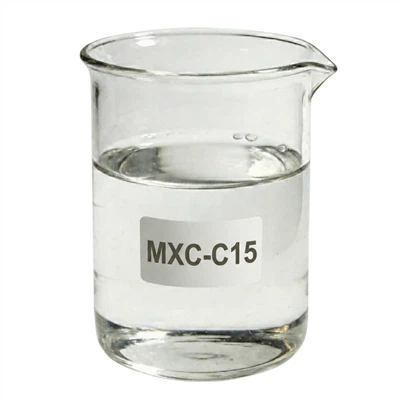
BRAND NAME: MXC-C15
CROSS REFERENCE GUIDE:15
PRODUCT NAME: Tetramethyliminobispropylamine
CAS NO.: 6711-48-4
PURITY : Min.95%
WATER : Max.0.5%

BRAND NAME: MXC-R70
CROSS REFERENCE GUIDE: JEFFCAT ZR-70
PRODUCTS NAME: 2-(2-(dimethylamino)ethoxy)ethanol
CAS NO.: 1704-62-7
PURITY: Min.98%
WATER CONTENT: Max.0.3%

Brand Name: MXC-T
CROSS REFERENCE GUIDE:T, JEFFCATZ-110
PRODUCT NAME: N,N,N′-trimethylaminoethylethanolamine
CAS NO.: 2212-32-0
PURITY : Min.98%
WATER : Max.0.5 %
Increased Reaction Rate
Catalysts can speed up chemical reactions by lowering the activation energy required for the reaction to occur. This means that reactions can happen at a faster rate with the presence of a catalyst.
Improved Efficiency
By accelerating reactions, catalysts can make industrial processes more efficient, reducing the amount of energy and resources required to produce a given amount of product.
Selective Reactions
Catalysts can promote specific reactions while leaving other components of a mixture unaffected, allowing for more precise control over the desired chemical transformations.
Environmental Benefits
In many cases, the use of catalysts can reduce the formation of unwanted by-products and pollutants, leading to greener and more sustainable chemical processes.
Cost Savings
By increasing reaction rates and efficiency, catalysts can lead to cost savings in industrial processes by reducing the time and resources needed for production.
How Does A Catalyst Work
A catalyst increases the rate of reaction by decreasing the activation energy. Decreased activation energy means less energy required to start the reaction.
The graph below shows the energy of a reaction both with and without a catalyst present. The x-axis is the reaction coordinate or progression of the reaction from reactant (left side) to product (right side). The y-axis is the energy.
With the catalyst present, the activation energy (Ea) is smaller. Visually, the hill the reaction has to climb before going downhill to the products is smaller. Just as riding a bike over a small uphill is easier than a larger uphill, a reaction proceeds faster when the activation energy hill is smaller.
A catalyst lowers the activation energy by changing the transition state of the reaction. The reaction then goes through a different pathway/mechanism than the uncatalyzed reaction. The catalyst does not change the net energy difference between reactant and product. The reaction's net equation will be the same in a catalyzed and uncatalyzed reaction even though the transition state changes.
Overall reaction: A + B + catalyst –> AB + catalyst
Net Reaction: A + B –> AB
Main Categories of Catalysts
Heterogeneous Catalysts
A heterogeneous catalyst is in a different phase than the reactants. Usually, that means the catalyst is in the solid phase and reactants are in the liquid or gas phase. Another name for a heterogeneous catalyst is a surface catalyst.
Heterogeneous catalysts work by attaching the catalyst to a solid support structure and the reactants flow over and past the catalyst, reacting along the way. A benefit of this type of catalyst is that the catalyst is easily separated from the product when the reaction is complete. The catalyst can then easily be reused. In manufacturing, this is an important cost-cutting measure. A drawback of the heterogeneous catalyst is that the amount of interaction between reactant and catalyst can be limited by surface area and diffusion of the product away from the surface.
A common heterogeneous catalyst is a catalytic converter for gasoline in cars. Another important heterogeneous catalyst is the Haber-Bosch process which forms NH3.
Homogeneous Catalysts
In a homogeneous catalyst, both the reactants and the catalyst are in the same phase. Normally they are both in either the liquid or gas phase.
The main benefit of a homogeneous catalyst is the increased interaction between reactant and catalyst. Both can move freely and are therefore more likely to interact and lead to a reaction.
Common homogeneous catalysts are transition metals and acids. One homogeneous catalyzed reaction is the conversion of oxygen to ozone in the atmosphere. Nitric oxide (NO) catalyzes the reaction. All of the participants in the reaction reside in the gas phase. Therefore we know it is a homogeneous catalytic reaction.
Enzymes
Enzymes are large proteins that are biological catalysts. They are powerful forces in the body. Often they catalyze only one very specific reaction (compared to inorganic catalysts that often catalyze a much more broad set of reactions). The specificity is due to the active site in the catalyst-a pocket of specific chemical composition formed by amino acids where only one very specific reactant model will fit. This is also referred to as the lock-and-key model.
Enzymes play a lot of important roles in the body. They catalyze the breakdown of starch to create glucose. They also convert carbon dioxide (CO2) to other molecules the body needs such as HCO3–. Enzymes assist and sped up almost all processes in the body.
What Is Catalyst in Chemistry
In Chemistry, catalysts are defined as those substances which alter the rate of reaction by changing the path of reaction. Most of the time, a catalyst is used to speed up or increase the rate of the reaction. However, if we go to a deeper level, catalysts are used to break or rebuild the chemical bonds between the atoms which are present in the molecules of different elements or compounds. In essence, catalysts encourage molecules to react and make the whole reaction process easier and more efficient.
Some of the important characteristic features of catalysts are given below:
A catalyst does not initiate a chemical reaction.
A catalyst is not consumed in the reaction.
Catalysts tend to react with reactants to form intermediates and, at the same time, facilitate the production of the final reaction product. After the whole process, a catalyst can regenerate.
A catalyst can be either in solid, liquid or gaseous forms. Some of the solid catalysts include metals or their oxides, including sulphides and halides. Semi-metallic elements such as boron, aluminium and silicon are also used as catalysts. Further, liquid and gaseous elements, which are in pure form, are used as catalysts. Sometimes, these elements are also used along with suitable solvents or carriers.
The reaction which involves a catalyst in their system is known as a catalytic reaction. In other words, a catalytic action is a chemical reaction between the catalyst and a reactant. This results in the formation of chemical intermediates that can further react quite readily with each other or with another reactant to form a product. However, when the reaction between the chemical intermediates and the reactants occurs or takes place, the catalyst is regenerated.
The reaction modes between the catalysts and the reactants usually tend to vary widely, and in the case of solid catalysts, it is more complex. Reactions can be acid-base reactions, oxidation-reduction reactions, coordination complexes formation, as well as the production of free radicals. For solid catalysts, the reaction mechanism is greatly influenced by surface properties and electronic or crystal structures. Some types of solid catalysts, such as polyfunctional catalysts, can have several reaction modes with the reactants.
Applications of CATALYST
According to some estimates, 60 percent of all commercially produced chemical products require catalysts at some stage during their manufacture.The most effective catalysts are usually transition metals or transition metal complexes.
The catalytic converter of an automobile is a well-known example of the use of catalysts. In this device, platinum, palladium, or rhodium may be used as catalysts, as they help break down some of the more harmful byproducts of automobile exhaust. A "three-way" catalytic converter performs three tasks: (a) reduction of nitrogen oxides to nitrogen and oxygen; (b) oxidation of carbon monoxide to carbon dioxide; and (c) oxidation of unburnt hydrocarbons to carbon dioxide and water.
Other examples of catalysts and their applications are as follows.
Ordinary iron is used as a catalyst in the Haber process to synthesize ammonia from nitrogen and hydrogen, as mentioned above.
The mass production of a polymer such as polyethylene or polypropylene is catalyzed by an agent known as the Ziegler-Natta catalyst, which is based on titanium chloride and alkyl aluminum compounds.
Vanadium(V) oxide is a catalyst for the manufacture of sulfuric acid at high concentrations, by a method known as the contact process.
Nickel is used in the manufacture of margarine.
Alumina and silica are catalysts in the breakdown of large hydrocarbon molecules into simpler ones-a process known as cracking.
A number of enzymes are used for chemical transformations of organic compounds. These enzymes are called biocatalysts and their action is called biocatalysis.
The electrodes of a fuel cell are coated with a catalyst such as platinum, palladium, or nanoscale iron powder.
The Fischer-Tropsch process is a chemical reaction in which carbon monoxide and hydrogen are converted into liquid hydrocarbons, in the presence of catalysts based on iron and cobalt. This process is mainly used to produce a synthetic petroleum substitute for fuel or lubrication oil.
Hydrogenation reactions, which involve the addition of hydrogen to organic compounds such as alkenes or aldehydes, require a catalyst such as platinum, palladium, rhodium, or ruthenium.
A number of chemical reactions are catalyzed by acids or bases.
What Does A Catalyst Do In Chemical Reactions
For a chemical reaction to occur, the reacting particles must collide with one another. The rate of the reaction depends on the frequency of collisions. Reacting particles can form products when they collide with one another provided those collisions have enough kinetic energy and the correct orientation. Particles that lack the necessary kinetic energy may collide, but the particles will simply bounce off one another unchanged.
A reaction will not take place unless the particles collide with certain minimum energy called the activation energy of the reaction. Activation energy is the minimum energy required to make a reaction occur. This can be illustrated on an energy profile for the reaction.
The frequency of collisions determines the reaction rate.
A catalyzed pathway has lower activation energy.
What causes a chemical reaction and how does it happen
The question may appear straightforward, but the solution is anything but. Consider a straightforward reaction. 2HCl = H2 + Cl2
Everything on the earth finds a way to relax by going to its lowest energy level. Molecules are no different. If you combine one H2 and one Cl2 molecule, they will choose to be in the lower energy state of HCl. However, nothing will happen until you provide the energy required to break the H-H and Cl-Cl bonds. The energy that is needed to break the bonds of reactant molecules is the activation energy of the reaction.
Reaction rate increases with temperature
Reaction speeds often increase as temperature rises because more thermal energy is available to attain the activation energy required to break bonds between atoms. Reactions can go in either a forward or backward direction until they finish or find equilibrium. The term "spontaneous" refers to reactions that proceed in the forward direction to approach equilibrium without requiring any free energy input. Non-spontaneous reactions require free energy input to proceed.
What determines the outcome of a chemical reaction
When competing paths lead to various products, the composition in a reaction product mixture determines whether thermodynamics or kinetics regulates the reaction.
Thermodynamics controls a reaction or kinetic controls a chemical reaction is decided by the composition in a reaction product mixture when competing pathways lead to different products
A reaction can be thermodynamically favorable but still kinetically unfavorable
Because thermodynamics deals with state functions, it can be used to describe the overall properties, behavior, and equilibrium composition of a system. It is not concerned with the particular pathway by which physical or chemical changes occur, however, so it cannot address the rate at which a particular process will occur.
Because product A's activation energy is lower than product B's, but product B is more stable, the distinction is important when product A forms faster than product B. A is the kinetic product in this situation, and it is favoured under kinetic control, while B is the thermodynamic product, and it is favoured under thermodynamic control. The reaction circumstances, such as temperature, pressure, or solvent, influence whether the kinetically regulated or thermodynamically controlled reaction pathway is preferred. This is only true if the two routes' activation energies differ, with one having a lower Ea (energy of activation) than the other.
The final composition of the system is determined by the presence of thermodynamic or kinetic control.
A reaction can be thermodynamically favorable but still kinetically unfavorable.
What Is The Role Of A Catalyst In Organic Reactions
A catalyst in organic reactions accelerates the reaction rate without being consumed in the process.
In more detail, a catalyst is a substance that can increase the rate of a chemical reaction by providing an alternative reaction pathway with a lower activation energy. This means that the reaction can occur more quickly, as less energy is required to initiate it. In organic reactions, catalysts are particularly important because they can help to control the selectivity of the reaction, meaning they can influence which products are formed.
Catalysts work by interacting with the reactants to form an intermediate compound. This intermediate compound is more reactive than the original reactants, which allows the reaction to proceed more quickly. The catalyst is then regenerated at the end of the reaction, meaning it is not consumed and can be used again.
In organic chemistry, catalysts can be used to control the stereochemistry of a reaction. This means they can influence the spatial arrangement of atoms in the products, which can be crucial for the function of organic compounds, particularly in biological systems. For example, enzymes, which are biological catalysts, are able to selectively catalyse reactions to produce specific products.
Catalysts can also be used to control the regiochemistry of a reaction, which refers to the region of a molecule that is altered during the reaction. This can be important in organic synthesis, where the aim is often to selectively modify specific parts of a molecule.
In addition, catalysts can be used to control the rate of a reaction. By choosing a catalyst that provides a lower activation energy for the reaction, chemists can control how quickly the reaction proceeds. This can be important in industrial processes, where it is often necessary to control the rate of a reaction to ensure it is safe and efficient.
Overall, the role of a catalyst in organic reactions is to increase the rate of the reaction and to control the selectivity, stereochemistry, and regiochemistry of the reaction.
Effect of Catalysts on Enthalpy Change and Activation Energy
Catalysts do not affect the overall enthalpy change for a reaction, as they only provide an alternative pathway for the reaction to proceed. The overall enthalpy change (∆H) is a state function, which means it depends only on the initial and final states of the reactants and products, and not on the path taken to reach those states. However, catalysts do affect the activation energy of a reaction, as this is the minimum energy required for reactants to transform into products through a particular pathway. By providing an alternative pathway with a lower activation energy, catalysts allow the reaction to proceed faster, as more reactant molecules have enough energy to overcome the lowered activation energy barrier.
What is the difference between an enzyme and a catalyst
Both, enzymes and catalysts affect the rate of a reaction without being consumed in the reactions themselves. All known enzymes are catalysts, but not all catalysts are enzymes.
Enzyme
Is an organic biocatalyst
Is a high molecular globular protein
All known enzymes are catalysts
Enzyme reaction rates are faster
Increases the rate of chemical reactions and converts the substrate into a product
Highly specific, producing large amounts of good residues
C-C and C-H bonds are present
Two types include activation and inhibitory enzymes
Examples include lipase and amylase
Catalyst
Is inorganic
Is a low molecular weight compound
All catalysts are not enzymes
Catalyst reaction rates are typically slower
May increase or decrease the rate of a chemical reaction
C-C and C-H bonds are absent
Not specific and may produce residues with errors
Two types include positive and negative catalysts
Example includes vanadium oxide
Our Factory
We have stable and superior route of synthesis, strict quality control and quality assurance system, experienced and responsible team, efficient and safe logistics. Based on this, our products are well recognized by the customers in Europe, Americas, Asia, Middle East etc.

FAQ
Q: How can a positive catalyst alter the reaction?
Q: What is the role of catalyst poison in Rosenmund reaction?
Q: What are the key factors in heterogeneous catalysis?
– Adsorption of reactant molecules activation centre.
– Formation of activation complex at the centre.
– This complex decomposes to give products.
– Desorption of products from the surface of the catalyst.
Q: What is the role of promoters in Haber's process?
Q: What is the significance of autocatalysis?
Q: What does catalyst mean in simple words?
Q: What is a catalyst answer?
Q: What is an example of a catalyst?
Q: What is a catalyst in biology?
Q: Is catalyst a good thing?
Q: Is being a catalyst good?
Q: What are the 3 types of catalyst?
Q: How does something act as a catalyst?
Q: What is another term for a catalyst?
Q: What is the opposite of a catalyst?
Q: What makes a good catalyst?
Q: What is a catalyst in biology for kids?
Q: Can a human be a catalyst?
Q: What is the most useful catalyst?
Q: How does a catalyst make a reaction go faster?
Hot Tags: MXC-T, China MXC-T manufacturers, suppliers, factory, Teda Catalyst, Dmcha Catalyst, dabco bl 11, Polyurethane Catalyst, dabco t9, Dmea Catalyst